75 Books in 12 Months

Today is Election Day in the US, and after the “shoot-self-in-the-other-foot” results came out this time last year, I decided the news – which for me was mostly podcasts – didn’t deserve my attention anymore.

I’ve always been a news junkie – from being an early user of Pointcast to listening to podcasts before they were even called that (I downloaded MP3s to a clunky Windows CE phone).

For well over a decade, my habit was a daily soundtrack of quality podcasts, and along with mostly getting through the The Economist audio edition each week. I was super plugged in – probably too plugged in. 

However, somewhere I’d heard that the average book contains something like 100x more effort per word or per hour than a blog post or podcast episode. It made sense – the writing and re-writing of a manuscript, the editors, the fact-checking, the publishing, printing, marketing – there’s just a lot more work there. While the output isn’t guaranteed to be high quality, it’s clear that writing a book requires a lot more effort to create, and involves risk to their reputation by publishing it, than a podcast or a blog post.

So I decided to change the inputs. I stopped listening to pundits and started listening to authors – same hours, but with a very different signal-to-noise ratio. Over the next twelve months, those hours added up to seventy-five books – with the added benefit of a lot more insight and a lot less outrage.


Of course, “reading” is being a bit generous. With my Audible subscription, I listened, with all of those hours of a day when your hands and eyes are occupied but your brain is empty. With a busy house, that meant listening to books while cooking, doing laundry, working out or driving to the mountains. I know it’s not the same as quiet, contemplative reading – but perfect is the enemy of done, and this experience turned out to be surprisingly great.

This meant I turned my idle time into learning time. Some books I finished in a couple of days; others were a lot longer (hello, Steve Jobs at over 25h). So while it wasn’t ideal – and there’s a couple of interactive books on this list I haven’t finished – being a slightly distracted reader is a lot better than an aspiring reader full of (reasonable) excuses.


A few friends I’ve talked to about this lately have asked for recommendations and a list. I’ll share those below, and in the future I’ll have more details to share about why I loved the books I gave 5 stars to. But overall, I’d had a few reflections beyond the obvious that this has been 1000x better than listening to podcasts.

  1. History is underrated. Every generation thinks it’s the apex of progress – and as a creature of the tech industry, I’m probably more susceptible than most to that hubris. Reading history has been educational and grounding; biographies show how our ancestors wrestled with the same greed, courage, and confusion we do – just with worse lighting.
  2. Psychology is endlessly fascinating. We all see the world through the eyes we have, filtered by the experiences we’ve had and moderated by our feelings. Given this is unavoidable, one of the most powerful things we can do is understand ourselves better – more honestly, more clearly. This isn’t about self-help or self-change or self-healing – this is about trying to get to the truth, knowing that all of us are biological filters.
  3. Successful people are all weird – thankfully. This is great news for all of us who don’t try and “fit in” with a crowd. Sure, they’re often talented and they’re always hard working, but they’re also independent thinkers who are comfortable enough in themselves to never stop being curious and learning. Since you’re almost certain to be as weird to be reading my post as I am for writing this, I think that is pretty awesome.
  4. Making time for reflection is the next challenge. While my pace will probably slow now that TeamScore is rocking and rolling, I’m going to keep this “books over podcasts” habit going. However, the challenge I’m still a long way from solving is making the time to reflect, internalize and truly learn from the lessons on these pages (or through these earbuds).

Anyway, onto the list!

American Kingpin: The Epic Hunt for the Criminal Mastermind Behind the Silk Road
⭐⭐⭐⭐⭐

By Nick Bilton (2017). The story of the hunt for Ross Ulbricht, the creator of the “Silk Road” dark web marketplace for illegal drugs and services.

Review: A truly remarkable piece of journalism into a wild story, the journey of Russ Ulbricht from brilliant and frustrated libertarian to digital gangster is incredible. The fact this guy was recently pardoned for his crimes while “the good guys” at the FBI and the grieving parents in Perth continue to suffer is a travesty. An incredible tale by Bilton – he must be as mad as any honest person for how things have played out.

Billion Dollar Whale
⭐⭐⭐⭐⭐

By Bradley Hope, Tom Wright (2018). Exposes the story of Jho Low and the 1MDB scandal, a massive international fraud scheme that siphoned billions from a Malaysian state fund.

Review: Incredible story of absurd extravagance and brazen criminality filled with a lot of color. Seeing a country slightly smaller than my own (Australia), and where I got to do a bit of business school (Penang), be systematically looted by the PM, his family and of course the criminal protagonist of this tale is enough to make your blood boil because the perpetrators appear to have gotten away with it all.

Crossing the Chasm
⭐⭐⭐⭐⭐

By Geoffrey A Moore (1991, 2012). Moore’s classic maps the perilous gap between early adopters and the mainstream market that kills most tech startups. He explains why enthusiasm from innovators doesn’t automatically translate to scale, and how positioning, messaging, and product focus must evolve to cross into the mass market. Still the definitive playbook for moving from promising idea to profitable company..

Review: An oldie but a goodie, the amazing thing about this book isn’t just its staying power – it is how it feels like it more relevant than at any point in the last 20 years. While many of the books here have shaped how I think about building Ascendius and growing the user-base of TeamScore, this book feels like it applies to a world where the audience is fragmented, unreachable and you have to earn the engagement from your ICP.

Flow: The Psychology of Optimal Experience
⭐⭐⭐⭐⭐

By Mihaly Csikszentmihalyi (1990). Introduces the concept of “flow,” a state of optimal experience where a person is fully immersed, focused, and energized by an activity..

Review: The closest book on this list to a religious experience, Mihaly’s book is dense, intense and it reads like the culmination of an incredible mind’s life’s work. I think I’m going to have to read it at least two more times – but I got so much out of the first read (I can still remember where I was standing and what I was looking at when I was listening to certain parts of it), I still recommend it without reservation.

If Anyone Builds It, Everyone Dies: Why Superhuman AI Would Kill Us All
⭐⭐⭐⭐⭐

By Eliezer Yudkowsky, Nate Soares (2024). Presents the argument that the development of superhuman artificial intelligence (AGI) poses an existential risk to humanity and is likely uncontrollable.

Review: A wild and super cerebral story which would be easy to put into the category of scaremongering hyperbole if it wasn’t for the credibility and pedigree of the authors. While understandably heavy on thought experiments – which are actually easy to read and understand, but way too elaborate to re-tell when you want to promote the book – this is a great read if you’re not already taking prescription meds for anxiety.

Invention: A Life of Learning Through Failure
⭐⭐⭐⭐⭐

By James Dyson (2021). James Dyson’s memoir about his life as an inventor and entrepreneur, emphasizing the critical importance of failure and persistence in the design process.

Review: An incredible story from one of the most determined and successful inventors of the last 30 years, Dyson’s autobiography contains both great insights and a lot of spicy opinions about the country he loves (and drives him mad). We had one of those knock-off Amway vacuums growing – reading how rotten they were made me wish we hadn’t. The UK is very lucky to have Dyson – definitely a diamond in the rough.

Man’s Search for Meaning
⭐⭐⭐⭐⭐

By Viktor E. Frankl (1946). A psychiatrist’s memoir of his time in Nazi concentration camps, where he developed “logotherapy,” a belief that the primary human drive is to find meaning.

Review: Understandably regarded as one of the most impactful books of the 20th century, I was surprised by the level of detail and the unvarnished nature of his insights on being in Nazi concentration camps. The psychology insights and lessons weren’t as extensive as I had anticipated given how impactful those insights have been over the years through other work, but this book is essential reading for any thinking person, especially with the echoes of the 1930s today.

Mindset
⭐⭐⭐⭐⭐

By Carol Dweck (2006, updated 2021). Introduces the concepts of the “fixed mindset” (believing abilities are static) and the “growth mindset” (believing abilities can be developed).

Review: A simple concept very well communicated, Dweck provides a great framework for use in business, education and especially as a parent. The examples – and self reflection – about why talented people with fixed mindsets get it wrong are exceptionally valuable.

Outlive: The Science and Art of Longevity
⭐⭐⭐⭐⭐

By Peter Attia MD, Bill Gifford (2023). A guide to longevity that focuses on proactive “Medicine 3.0,” aiming to extend healthspan by preventing chronic diseases rather than just treating them.

Review: Probably the most impactful book on my own personal health journey over the last year and a half, Attia’s clear, thoughtful and vulnerable book about increasing healthspan is mercifully short on preaching and unrealistic dictates, and instead focuses on the why of healthspan with very accessible and sensible tips on what you can do now.

Peak Human: What We Can Learn from History’s Greatest Civilizations
⭐⭐⭐⭐⭐

By Johan Norberg (2025). Argues that historical civilizations achieved greatness by embracing specific values like trust, openness to trade, and innovation.

Review: One of the best books I’ve read all year, Peak Human is witty, well researched and possibly the most nutrient-rich history of humanity that I’ve ever read. You could spend a few semesters studying history in University and only come out with half the insights and lessons from this incredibly written and frankly enjoyable book. The fact he points out that peak civilizations fall when they follow the current playbook of Western leaders is troubling but not at all surprising.

Problem Hunting: The Tech Startup Textbook
⭐⭐⭐⭐⭐

By Brian Long (2023). A textbook for tech founders on how to identify, validate, and solve meaningful problems before building a product.

Review: One of the most recommended books to my Startmate mentees, Brian outlines an excellent playbook for finding, validating and then going to market as an entrepreneur. This is also one of the few books I’ve re-read – it is that good.

Source Code: My Beginnings
⭐⭐⭐⭐⭐

By Bill Gates (2024). Bill Gates’s memoir detailing his early life, his formative experiences with computers, his intellectual development, and the founding of Microsoft.

Review: When the book is this long and it is just the first volume, you’d be right to worry it is going to be a slog. Fortunately, Bill’s style and content is anything but boring, and learning from someone who was right in the middle of the emergence of my industry in his own words is a really special treat.

Steve Jobs
⭐⭐⭐⭐⭐

By Walter Isaacson (2011). The definitive biography of the Apple co-founder, based on over 40 interviews with Jobs and 100+ with friends, family, and colleagues.

Review: Isaacson’s biography of one of the most important players in the technology industry is a tour de force, and it is amazing that at over 650 pages there is hardly a wasted word or unnecessary story. I didn’t take as many lessons away as an entrepreneur from Job’s story as I had expected, but the twists and turns of his journey and especially his later career triumph with NeXT, Pixar and the iPhone make for an incredible and highly entertaining story. And yes, I cried at the end, too.

The Basic Laws of Human Stupidity
⭐⭐⭐⭐⭐

By Carlo M. Cipolla, foreword by Nassim Nicholas Taleb (1976, this edition 2021). A satirical essay outlining five laws of stupidity, arguing that stupid people are a powerful and underestimated force in human affairs.

Review: Ironically not intended to be turned into a book, this impressive satirical essay is closer to the truth than I’d like to admit. The best book for understanding the current American political climate – for the first time (ever?), a coalition of the stupid, led by bandits, has managed to steal the future of the richest country on earth. A must read (which you’ll get through in 2-3 hours).

The Code Breaker: Jennifer Doudna, Gene Editing, and the Future of the Human Race
⭐⭐⭐⭐⭐

By Walter Isaacson (2021). Details the life and work of Nobel laureate Jennifer Doudna and the scientific and ethical revolution of CRISPR gene-editing technology.

Review: A simple concept very well communicated, Dweck provides a great framework for use in business, education and especially as a parent. The examples – and self reflection – about why talented people with fixed mindsets get it wrong are exceptionally valuable.

The Fish That Ate the Whale: The Life and Times of America’s Banana King
⭐⭐⭐⭐⭐

By Rich Cohen (2012). Tells the story of Sam “the Banana Man” Zemurray, a complex and ruthless entrepreneur who built the United Fruit Company and influenced history.

Review: In this incredible story of a truly self-made man and an industry I’d never really thought about, Cohen does an incredible job illuminating the role of the fruit-barons in central to north American trade and the damage that they did to countries which in no small part remain impoverished and weak states to this day.

The Gambler: How Penniless Dropout Kirk Kerkorian Became the Greatest Deal Maker in Capitalist History
⭐⭐⭐⭐⭐

By William C. Rempel (2018). Chronicles the life of Kirk Kerkorian, a secretive and high-stakes deal-maker who built empires in aviation, casinos, and film.

Review: Recommended by one of my YPO Forum mates, Rempel’s biography of Kerkorian was an entertaining and enlightening tale about one of the most impressive entrepreneurs I’d never heard of. Finding myself in Vegas a month or so later and looking around at the town Kerkoiran more than anyone else “built” was also really special. If only his character in his professional life was maintained into his personal life, he could have done even so much more.

The Innovators: How a Group of Hackers, Geniuses, and Geeks Created the Digital Revolution
⭐⭐⭐⭐⭐

By Walter Isaacson (2014). Chronicles the history of the digital revolution, focusing on the collaborative teams and individuals who created computers and the internet.

Review: Issacson’s next book after the runway success of his Jobs biography, this deeply researched historical piece should be essential reading for any tech entrepreneur. The people, their stories and the history of our industry that they created is entertaining and very very well written.

The Money Trap: Lost Illusions Inside the Tech Bubble
⭐⭐⭐⭐⭐

By Alok Sama (2024). A memoir from a tech investor about the excesses, hubris, and illusions of multiple tech investment bubbles and the lessons learned from being in the room.

Review: A fantastic story which weaved memoir and incredible first person stories from a wild time in capitalism with a great life lesson about doing what matters. What a debut book! I also hope to buy him a glass of satisfactory red wine on my next trip to NYC.

The Psychology of Money: Timeless Lessons on Wealth, Greed, and Happiness
⭐⭐⭐⭐⭐

By Morgan Housel (2020). Explores the strange ways people think about money, arguing that financial success is less about knowledge and more about behavior.

Review: This fairly short and easy read is probably the best book in its category that I’ve read. Examples like the story from being a valet in his younger years and noticing that everyone looking at a fancy car was never caring about the driver, and how people conflate acquiring things with earning respect and acceptance were a great antitode to the consumerist world we live in.

The SaaS Playbook: Build a Multimillion-Dollar Startup Without Venture Capital
⭐⭐⭐⭐⭐

By Rob Walling (2023). A guide for entrepreneurs on how to build a successful Software as a Service (SaaS) business through bootstrapping, without relying on venture capital.

Review: While Walling’s historical focus has been on the incrementalism of bootstrapping (his prior book is called “Start Small, Stay Small“), this compendium of tips on building a SaaS company was really on point regardless of whether you’re on the VC track or not. There’s almost nothing about this book I would change if I were writing it myself, which means now I’m not tempted to 😉

Thinking, Fast and Slow
⭐⭐⭐⭐⭐

By Daniel Kahneman (2011). This Nobel-prize winning psychologist summarizes his research on the two systems of thought: “System 1” (fast, intuitive) and “System 2” (slow, deliberate), and the cognitive biases that affect them.

Review: An incredible book from an incredible mind, Kahneman’s “Thinking, Fast and Slow” should be required reading in almost all professional and leadership domains. Unlike other authors on this list who made their case with anecdotes to support their thesis, Kahneman’s memoir or sorts is chock full of specific experiments and analytical data – so much so that it is one of the only books on this list I couldn’t get through in Audiobook form.

Trillion Dollar Coach: The Leadership Playbook of Silicon Valley’s Bill Campbell
⭐⭐⭐⭐⭐

By Eric Schmidt, Jonathan Rosenberg, Alan Eagle (2019). Shares the leadership principles of Bill Campbell, the legendary Silicon Valley executive coach who mentored Steve Jobs, Eric Schmidt, and others.

Review: Rosenberg, Schmidt and Eagle do a great job sharing the insights and experiences of the most influential Silicon Valley leader you’ve never heard of. The willingness to tell stories of Campbell’s career which don’t show him to be a saint, but instead a very real and deep leader, make it all the richer.

1929: Inside the Greatest Crash in Wall Street History – and How It Shattered a Nation
⭐⭐⭐⭐

By Andrew Ross Sorkin (2025). An immersive narrative of the 1929 Wall Street collapse, threading high-flying finance, politics and human folly into the story of a financial empire’s unraveling.

Review: An excellent story expertly told, Sorkin provides a richness and depth to one of the most infamous years in American history – and critically, the many players involved. My only criticism was the lack of the wider lens into the ongoing causes of the Depression. Many are self-evident from the telling, but my only reason for not giving it 5 stars is it felt like it could have been a slam dunk with that extra color.

Bad Company: Private Equity and the Death of the American Dream
⭐⭐⭐⭐

By Megan Greenwell (2024). An investigation into the private equity industry, arguing that its practices of leveraged buyouts are detrimental to workers and the economy.

Review: While it is clear from the title that this is going to be a negative piece about Private Equity in America, Greenwell takes a surprisingly balanced and hyperbole-free look at the industry, leaving the reader to form their own opinions. It reinforces my belief in how messed up it when the takers (using other people’s money no less) are making out like bandits at the expense of the builders, makers and creators who actually make the world a better place.

Building a StoryBrand
⭐⭐⭐⭐

By Donald Miller (2017, reviewed and unavailable, now updated to Building a StoryBrand 2.0 in 2025). Presents the “SB7 Framework,” a 7-part storytelling method to help businesses clarify their message and connect with customers.

Review: Similar to April Dunford’s “Obviously Awesome” (below) but with a more structured 7-step framework for the way to use human’s natural way of learning – story telling – in how you connect with an audience.

Buy Then Build: How Acquisition Entrepreneurs Outsmart the Startup Game
⭐⭐⭐⭐

By Walker Deibel (2019). A guide for “acquisition entrepreneurs,” advocating for the strategy of buying an existing, profitable business rather than starting from scratch.

Review: Walker’s book and insights were spot on, and while it is a bit unfortunate that so many smart people I know are now GP’ing “search funds” to make sure they get paid fees (rather than being true entrepreneurs), the playbook makes a lot of sense and I hope more true entrepreneurs follow his advice.

Drive: The Surprising Truth About What Motivates Us
⭐⭐⭐⭐

By Daniel Pink (2009). Argues that true motivation comes from three internal factors: autonomy (self-direction), mastery (getting better), and purpose (serving something larger).

Review: Pink’s most prominent work does a great job of exploring how success in fields of non-routine work – which is almost all knowledge work today – comes down to having autonomy, mastery and purpose. His focus on managing by outcomes is also laudable, if often impractical since most non-routine work isn’t objectively measurable (in part because it isn’t routine).

Elon Musk
⭐⭐⭐⭐

By Walter Isaacson (2023). A comprehensive biography detailing Musk’s life, risk-taking leadership style, and the inner workings of his companies (SpaceX, Tesla, etc.).

Review: Another great biography from Isaacson, his access to Musk and insights into the 21st century’s greatest entrepreneur before he went completely off the rails in 2024 lets the reader understand the path of a very influential which is incredibly valuable to have before the ultra-right Nazi-salute transition. Makes me want to go and read a biography of Howard Hughes now.

Find Your Why: A Practical Guide for Discovering Purpose for You and Your Team
⭐⭐⭐⭐

By Simon Sinek, David Mead, Peter Docker (2017). A practical follow-up to “Start With Why,” offering step-by-step exercises for individuals and teams to discover their core purpose.

Review: A good practical playbook and follow up to Simon’s incredible “Start with Why” which I still vividly remember reading over a decade ago. I loved hearing how Simon, David and Peter have built a practice around Simon’s ideas. If you’ve read Start with Why, then you probably don’t need to read this, though, unless you’re trying to roll it out through a company.

Going Infinite: The Rise and Fall of a New Tycoon
⭐⭐⭐⭐

By Michael Lewis (2023). Documents the meteoric rise and catastrophic collapse of Sam Bankman-Fried and his cryptocurrency exchange, FTX.

Review: Lewis has seen a lot, and you get the sense reading Going Infinite that he is just as confused and off-balance as the rest of us as the FTX story unfolds. The good fortune of his “fly on the wall” timing to be there through the apex of the FTX story was incredible, and the fact the book was written when the story wasn’t fully done made it even more interesting. SBF is a sympathetic is completely all over the shop character, and given FTX shareholders will make a profit (even after the scam of bankruptcy fees), as well as the fact he didn’t pay hitmen like Ulbricht, means I can see why the crypto-loving felon-in-chief will pardon him – unless CZ’s bribe for his recent pardon required keeping SBF in prison.

Good to Great: Why Some Companies Make the Leap…And Others Don’t
⭐⭐⭐⭐

By Jim Collins (2001, 2005, 2010). Drawing on rigorous research, Collins identifies what separates merely good companies from truly great ones that sustain superior performance. With concepts like Level 5 Leadership, the Hedgehog Concept, and the Flywheel, he distills timeless truths about discipline, focus, and humility at scale. It’s less about charisma, more about consistency.

Review: Described by another author on this list as possibly the most in-depth and high quality studies of company performance ever undertaken, Collins’ classic has stood the test of time even if some of the great companies (Circuit City, Walgreens, Wells Fargo) subsequently lost their way.

Grit: The Power of Passion and Perseverance
⭐⭐⭐⭐

By Angela Duckworth (2016). Argues that a special blend of passion and perseverance (“grit”) is a more significant predictor of success than innate talent.

Review: Duckworth’s work, paired with the Growth Mindset approach of Carol Dweck, are essential reading for people who want to fulfil their potential and for the parents who want to help their kids do the same. I think Dweck’s view of being growth minded is more important than the sheer perseverance of grit, but if you’re growth minded but weak then you’re not going win, either.

Hooked: How to Build Habit-Forming Products
⭐⭐⭐⭐

By Nir Eyal, Ryan Hoover (2014). This book presents the “Hook Model” — a four-step loop of Trigger → Action → Variable Reward → Investment — that explains how successful digital products become habits for users. It then applies this framework to show how product designers and marketers can increase user engagement, reduce reliance on expensive acquisition tactics, and build products that users return to almost automatically.

Review: A great book which brings together otherwise well explored psychology into a playbook that is essential reading for any entrepreneur or product leader. Unfortunately, most of our industry stopped reading before they got to the later chapter about “doing the right thing”, which seems to have prompted Eyal to write an antidote book to help sooth his conscience – but probably too late.

How to Make a Few Billion Dollars
⭐⭐⭐⭐

By Brad Jacobs (2024). The memoir of serial entrepreneur Brad Jacobs, detailing his methods for building eight billion-dollar companies in different industries.

Review: Brad’s openness to sharing how we found valuable opportunities in what would be a private-equity roll-up playbook except that he actually ran these companies (instead of hiring a CEO and flipping them) was a great read with a lot of insights and unfortunately too many copy-cats trying to take short-cuts now.

In Praise of the Office: The Limits to Hybrid and Remote Work
⭐⭐⭐⭐

By Peter Cappelli, Ranya Nehmeh (2025). Argues against the long-term viability of fully remote or hybrid work, highlighting the benefits of in-person office collaboration.

Review: Cappelli and Nehmeh do a great job of getting beyond the “preference” lens of remote vs office work (which for a lot of folks becomes a psuedo-religious attempt at justifying beliefs) and use data to help make the case for companies either getting back to their pre 2020 “normal” or investing the time and energy into making remote actually work..

Mindstuck: Mastering the Art of Changing Minds
⭐⭐⭐⭐

By Michael McQueen (2023). Explores why people get “stuck” in their beliefs and provides strategies for effectively changing minds (including your own).

Review: Michael’s examples and stories help to frame a playbook for helping to change minds through constructive engagement and understanding. The old adage of “A mind changed against its will will be of the same opinion still” is as true as ever, and in our increasingly tribal and cultural conflicts, his book provides a great and care-led approach to helping to unstuck the minds of others – but most of all, your own. Also loved hearing my brother’s voice for 11 hours of self-narration!

Never Enough: From Barista to Billionaire
⭐⭐⭐⭐

By Andrew Wilkinson (2024). The memoir of Andrew Wilkinson, detailing his journey from a small web design agency to building a $600 million company, and the personal cost of that ambition.

Review: A great and vulnerable story about the challenges of building a great business and then the insights into the benefits of investing in them instead. One of the few books on this list that I recommended to my wife – and that she then read and enjoyed!

Never Split the Difference
⭐⭐⭐⭐

By Chris Voss (2016). Former FBI hostage negotiator Chris Voss brings field-tested psychological tactics to business and everyday life. His “tactical empathy” approach flips conventional wisdom, showing that great negotiators don’t compromise – they connect, listen, and influence through calibrated questions and emotional intelligence

Review: In instant fan favorite – who doesn’t love a book that starts like a lower-competency scene from Heat – Voss’ ability to bring real world experience to the concepts of really taking the time to get yourself into the shoes of the other person (Habit 5 from Covey) and then combining it with the insight that you make your counterparty come up with how you can give them what they want is brilliant. I just wish more salespeople didn’t just read it as a tactic for manipulation as opposed to a call for understanding and empathy to get deals done.

Obviously Awesome: How to Nail Product Positioning so Customers Get It, Buy It, Love It
⭐⭐⭐⭐

By April Dunford (2019). A practical guide to product positioning, teaching companies how to articulate their product’s value so that customers instantly understand it.

Review: Approachable and self-deprecating in a way only Canadian’s can be, April’s positioning book is tight and packed with really useful insights. A great and tighter compliment to Allyson’s Standout Startup.

Sales Pitch: How to Craft a Story to Stand Out and Win
⭐⭐⭐⭐

By April Dunford (2023). A guide on how to craft a compelling sales pitch by using storytelling techniques to stand out and connect with customers..

Review: A great and practical guide to selling with a focus on narrative as the driver to making a great connection with prospects. Builds and extends on her marketing book form 5 years earlier – I just hope her retention and client success book arrives before 2029!

Scarcity Brain: Fix Your Craving Mindset and Rewire Your Habits to Thrive with Enough
⭐⭐⭐⭐

By Michael Easter (2023). Examines how modern scarcity cues hijack our brains and provides methods to rewire habits for contentment.

Review: Easter’s deep dive into the impact of our deep mental patterns of scarcity that drive caving is an entertaining read and the exposes of Vegas Slot/Poker machines from the perch of someone at the University of Nevada, Las Vegas, is compelling. Unfortunately, you get the sense that he wanted the other anecdotes – especially the Iraqi minister and the tribe in the Amazonian jungle – to be more impressive than compelling, leading this book to slip into the Gladwell category (which is no doubt good for sales and being a keynote speaker).

Spam Nation
⭐⭐⭐⭐

By Brian Krebs (2014). An investigative journalist’s deep dive into the shadow economy of organized cybercrime, focusing on the networks that produce spam and malware.

Review: One of the best bloggers on the security beat, Brian went all the way with this story and helped me understand more than anyone else the way the organized digital criminals can cause so much havoc. And that was before crypto made it possible to do real damage with ransomware and pig butchering! Amazing to think that this period in the late 2000s was an innocent age.

Standout Startup: The Founder’s Guide to Irresistible Marketing That Fuels Growth
⭐⭐⭐⭐

By Allyson Letteri (2024). A marketing guide for early-stage founders on how to build a brand and marketing strategy that attracts customers and fuels growth.

Review: Allyson’s book provided a great framework with more span than many other books in the genre for having a great positioning, personality and ICP framework. Her website templates were also super helpful in doing my GTM planning work for TeamScore.

The Algebra of Wealth: A Simple Formula for Financial Security
⭐⭐⭐⭐

By Scott Galloway (2024). Provides a formula for achieving financial security by focusing on stoicism, time management, and strategic (non-traditional) diversification.

Review: Having been a fan of Galloway from the first time I read his posts taking apart WeWork, and then more recently listening to him for a couple of hours a week on his numerous podcasts, I found this more measured and considered advice in book format to be an even better form of Prof G.

The Big Leap
⭐⭐⭐⭐

By Gay Hendricks (2009). Introduces the concept of the “Upper Limit Problem,” an internal barrier that subconsciously sabotages people when they achieve success.

Review: Hendrick’s impactful and well regarded book takes a more scientific approach to making the psychological case to why we naturally have unnecessary mental limits because of our experiences. While it is considered part of the self-help category, I felt it was more a great piece to improve performance psychology vs help yourself out of a rut.

The Cold Start Problem: How to Start and Scale Network Effects
⭐⭐⭐⭐

By Andrew Chen (2021). Analyzes how new networks and marketplaces successfully launch and scale by overcoming the initial challenge of needing users to attract more users.

Review: I was lucky enough to meet Andrew in one of his and Brian’s first Reforge classes in SF, and he continues to get the balance between thoughtful advice and practical experience right. While there’s always the temptation to take a victory lap, he made sure this book was practical and humble.

The Founders: The Story of Paypal and the Entrepreneurs Who Shaped Silicon Valley
⭐⭐⭐⭐

By Jimmy Soni (2022). The detailed story of the “PayPal Mafia” (Elon Musk, Peter Thiel, etc.) and how their collaboration at PayPal shaped Silicon Valley.

Review: As a tech entrepreneur, I’ve known of the “PayPal Mafia” and their outsized impact on our industry for some time, but I’ve frankly never really been impressed with the PayPal product (I remember trying to build an integration with it 15 years ago and thinking it was a steaming pile of high fee garbage – and grateful that Stripe came along instead). Reading this story didn’t change my opinion of the product today, but I did learn a lot about the amazing things the founders did in what I now appreciate a lot more as a pioneering technology.

The Fred Factor: How Passion in Your Work and Life Can Turn the Ordinary into the Extraordinary
⭐⭐⭐⭐

By Mark Sanborn (2004). Uses the story of a postal carrier named Fred to illustrate how passion and service can turn any job into an extraordinary opportunity.

Review: I was lucky to meet Mark a few weeks ago in Colorado, and bought his book on a whim after seeing him MC. I can see how this book and the story has been able to help Mark build an incredible speaking career, and the broad applicability of this simple but impactful story makes this light and easy read also easy to recommend.

The Outsiders: Eight Unconventional CEOs and Their Radically Rational Blueprint for Success
⭐⭐⭐⭐

By William N. Thorndike (2012). Profiles eight unconventional CEOs who achieved extraordinary long-term returns by mastering capital allocation and adopting a rational mindset.

Review: As a thesis, this isn’t the strongest book, but as what amounts to 8 mini biographies of incredibly successful CEOs, it is fantastic. So many lessons to learn, and Thorndike does a great job weaving them together in a way that provides both contrast and mutual reinforcement of the role of CEOs to focus not just on strategy but the need to wisely allocate the capital to make their strategy a success.

The Scout Mindset: Why Some People See Things Clearly and Others Don’t
⭐⭐⭐⭐

By Julia Galef (2021). Contrasts the “soldier mindset” (defending beliefs) with the “scout mindset” (seeking truth) and argues for the superiority of the latter.

Review: A similar albeit subtly different message than Dweck’s 2006 Mindset, Galef makes a good case for keeping an open mind and remaining curious. Similiarly well timed to McQueen’s Mindstuck, this book could provide a good framework for folks stuck defending their worldview to learn from – although I fear the folks who most need to change their mentality are the least likely to do so.

What You Do Is Who You Are: How to Create Your Business Culture
⭐⭐⭐⭐

By Ben Horowitz (2019). Argues that a company’s culture is defined by its actions and virtues, not its stated values, drawing leadership lessons from history.

Review: A good, authentic book from Ben, although The Hard Thing about Hard Things was a hard act to follow!

Who
⭐⭐⭐⭐

By Geoff Smart, Randy Street (2008). Smart’s Who reframes hiring as a repeatable business process rather than a gamble. With a focus on defining clear scorecards, structured interviews, and disciplined selection, it offers a practical playbook for consistently finding “A Players.” The core insight: the biggest mistake companies make isn’t what they do – it’s who they hire.

Review: I’ve been fortunate enough to get to know Geoff at a few events over the years, and he’s the real deal – obviously very smart (pardon the pun) but also genuine and interested in people and making a difference. Given my own track record of making disastrous hires and knowing first hand the millions it cost me, I loved Smart’s way of building the network of talent before you need them. Hiring is a massive gamble – he just helps you put the odds a little more in your favor, especially with his interview process.

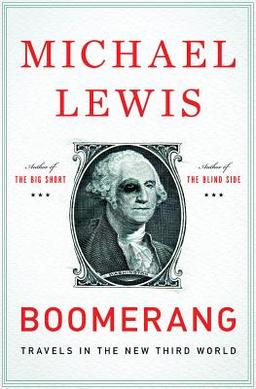
Boomerang: Travels in the New Third World
⭐⭐⭐

By Michael Lewis (2011). A global tour of the post-2000s credit-boom hangover in Iceland, Greece, Ireland, Germany and the U.S., exploring how cheap money spilled across borders.

Review: The most caustic and opinionated of Lewis’ books, Boomerang tells many of the great stories behind the different folks who lost out from the 2008 financial crisis beyond the regular stories of American homeowners ending up underwater. He’s probably not welcome in a lot of countries as a result of this one – perhaps that’s why the book isn’t on Audible anymore?
Build: An Unorthodox Guide to Making Things Worth Making
⭐⭐⭐

By Tony Fadell (2022). Combines memoir and tactical playbook from the designer of the iPod and co-founder of the smart-home company Nest, showing how to build products, teams and businesses that matter.

Review: Tony’s book helps to unpack a process he followed to build some truly iconic products. The focus on the true goal/outcome as opposed to being insecure about how to look like you’re making progress was great.

Designing Your Life: How to Build a Well-Lived, Joyful Life⭐⭐⭐

By Bill Burnett, Dave Evans (2016). The original book that teaches how to use design thinking to create a more meaningful and fulfilling life, regardless of age or career stage.

Review: You can see why Bill and Dave run such a popular program at Stanford, with their practical advice on how to apply design thinking beyond your career lens.

Designing Your Work Life: How to Thrive and Change and Find Happiness at Work⭐⭐⭐

By Bill Burnett, Dave Evans (2020). Applies design thinking principles to help people find more meaning and happiness in their current jobs, without necessarily having to quit.

Review: A structured and thoughtful approach to reflecting on what you love to do, what you’re good at, and how to then apply design thinking to these insights to come up with a path that you can both enjoy and succeed at.

Gap Selling⭐⭐⭐

By Keenan (2018). A sales methodology focused on identifying the “gap” between the customer’s current state and their desired future state.

Review: It feels like there’s a million sales books out there, and the flaw with almost all of them is they could have made their case just as well in 2000 words, not 250+ pages. This book makes a great case – that sales isn’t about the seller, but all about the buyer – but it goes on longer than it needed to.

High Growth Handbook⭐⭐⭐

By Elad Gil (2018). A modern operator’s manual for founders who’ve found product-market fit and now face the chaos of hypergrowth. Drawing from conversations with top tech leaders, Gil breaks down scaling people, culture, operations, and strategy in a pragmatic, no-fluff format. It’s the book you wish you had once growth stops being theoretical.

Review: Elad’s compilation of so many great blog posts, this compendium of advice is rich in rounded insights for entrepreneurs. My main criticism is that, while an angel investor in so many of the companies that went on to become big, a lot of the advice comes from experiences as companies that were already pretty huge when he got there, making this less applicable for early stage operators.

How to F–k Up Your Startup⭐⭐⭐

By Kim Hvidkjaer (2021). Analyzes the common pitfalls and mistakes that lead to startup failure, offering practical advice on what not to do.

Review: A solid and fast moving book that is as filtered as the title, Hvidkjer does a good job pointing out the many landmines in the startup game. That said, I wouldn’t encourage my mentees to read it – they’re better off focusing on the prize, not ruminating on the failures.

Lives of the Stoics: The Art of Living from Zeno to Marcus Aurelius⭐⭐⭐

By Ryan Holiday, Stephen Hanselman (2020). A collection of mini-biographies of the major figures of Stoic philosophy, showing how they applied their principles in their lives.

Review: A great chronological journey through the world of the early stoic philosophers, the narrative was interesting and educational. The applicability is up to the reader – I found it mostly a story without happy endings.

Meditations⭐⭐⭐

By Marcus Aurelius, George Long, Duncan Steen (c 180 AD). The private journal of Roman Emperor Marcus Aurelius, outlining his personal reflections on Stoic philosophy, duty, and resilience.

Review: It is easy to see how this philosopher emperor casts such a long shadow as the last of the Five Good Emperors of the Roman Empire. As a book, it is pretty hard going and definitely not designed to be read cover to cover. It is also easy – and appreciated – to see how Ryan Holiday and others have made this great work much more applicable and digestible. If you want the good stuff, read The Obstacle Is The Way.

Range: Why Generalists Triumph in a Specialized World⭐⭐⭐

By David Epstein (2019). Makes the case that generalists, not specialists, are better primed for success in complex and unpredictable fields.

Review: This was a very enjoyable read and appealed to my own bias to having a wide range of interests and knowledge. However, in the same way that a lot of Gladwell books are interesting, entertaining to read and “make sense”, this story leans a little too much on anecdotes to make its case, which makes it hard to steel-man.

Religion for Atheists: A Non-Believer’s Guide to the Uses of Religion⭐⭐⭐

By Alain de Botton (2012). Suggests that secular society can learn from and adapt the useful aspects of religion (like community, ritual, and moral guidance) without adopting its beliefs.

Review: A cerebral and respectful exploration of the drivers of religion and why an atheist should not throw the baby out with the bathwater. Unfortunately a bit too pompous in style to make it something I can heartily recommend.

Reset: How to Change What’s Not Working⭐⭐⭐

By Dan Heath (2025). Offers strategies to identify when something isn’t working in your life or career and provides a practical guide for making a significant change.

Review: An enjoyable read with lots of practical examples, this book is a useful update to his breakthrough book Switch from 15 years earlier.

The Art of Impossible: A Peak Performance Primer⭐⭐⭐

By Steven Kotler (2021). A high-performance primer that breaks down the neurobiology of “flow” and peak performance to help individuals achieve seemingly impossible goals.

Review: One of the first books I read in late 2024, this was a helpful gateway into a range of fields of performance psychology and excellence. Entertainingly written, Kotler provides a more anecdote driven exposition of the concepts championed by the “Father of Flow”, Csikszentmihalyi. My main criticism is that Kotler assumes the reader is already familiar with the sports-based feats he describes – while they sound impressive enough, if you don’t already know what he’s talking about, it is hard to really get on board with his anecdote-driven thesis.

The Phoenix Economy: Work, Life, and Money in the New Not Normal⭐⭐⭐

By Felix Salmon (2023). Analyzes the post-pandemic economic landscape, arguing that a “new normal” is emerging defined by inflation, labor dynamics, and new market forces.

Review: A prolific blogger and financial industry commentator, Salmon’s first book is well rewritten and dared to be insightful and predictive at a time when things were still very much in flux post pandemic. While not all insights have aged well – “new not normal” turned out not to be done of course – reading it 18 months after it was published was still interesting.

Hidden Potential: The Science of Achieving Greater Things⭐⭐

By Adam Grant (2023). Argues that success is less about innate talent and more about developing the “character skills” and systems to grow and achieve.

Review: Adam’s work is always a great read, but this one felt like a brand extension that didn’t need to be written.

Revenge of the Tipping Point: Overstories, Superspreaders, and the Rise of Social Engineering⭐⭐

By Malcolm Gladwell (2024). A revisit and re-examination of his original “Tipping Point” theory in the context of the modern social media and information age.

Review: As with all Gladwell books, this update to the breakout “The Tipping Point” is a fun read, written in an entertaining and accessible style with anecdotes that stick with you. Also like all of his work that I’ve read, the anecdotes help make a case but the case never really feels strong – emotionally compelling in the moment, but not as strong as many other pieces on this list.

The 38 Letters from J.D. Rockefeller to His Son: Perspectives, Ideology, and Wisdom⭐⭐

By J. D. Rockefeller (2006). A collection of personal letters from J.D. Rockefeller to his son, offering timeless advice on life, work, character, and generosity.

Review: Having previously read Ron Chernow’s Titan, the canonical biography of Rockefeller at almost 800 pages (over 35 hours), I didn’t get as much out of this book of letters as others may. The advice from an aging patriarch to his son trying to fill impossible shoes though are a precious gift and an opportunity to get advice first hand from one of the world’s most successful entrepreneurs.

University of Berkshire Hathaway⭐⭐

By Daniel Pecaut, Corey Wrenn (2017). Compiles 30 years of wisdom from Buffett and Munger’s insightful responses at the Berkshire Hathaway annual shareholders meetings.

Review: As the greatest investor of the last 100 years, Buffet (and Monger) are rightly people to learn from in business. Given their penchant for using their annual reports and their annual meetings as their main (in some years only) ways of making public statements, this summary of those annual meetings and the insights shared within was a good read, if not as nutritionally dense as some other Buffet content I’ve read.

Empire of Al

By Karen Hao (2025). An investigative look into the power struggles, ethical dilemmas, and internal dynamics at OpenAI under Sam Altman’s leadership.

Review: A deeply reported piece in a fast changing and emerging industry from a writer closer to a lot of the players, but unfortunately it loses its punch/impact because the write goes all social justice warrior on how bad it is to pay folks in Africa to tag datasets (perhaps unemployment and hunger are more desirable?). Making this a story about colonialism loses the writer the credibility we need her to have at this time in history unfortunately.

Good Energy

By Casey Means MD, Calley Means (2024). Argues that metabolic dysfunction is the root cause of many chronic diseases and offers a guide to improving metabolic health.

Review: Casey’s book is a strong and passionate exposition of a theory that the root of many health conditions is metabolic health. If she hadn’t then gone down the environmental zealot route with the unsubstantiated claims of everything organic being better for you, she’d have had a bigger impact. Unfortunately, the strong hippie-vibes means it will likely be mostly successful as preaching to the choir.

The Road to Character

By David Brooks (2015). Contrasts “resume virtues” (skills for external success) with “eulogy virtues” (qualities of inner character) and argues for the importance of the latter.

Review: While by no means a regular reader of Brooks’ columns, I’ve often enjoyed his take through the NYT or PBS Newshour when I’ve read/watched them. Unfortunately, this book felt like more of a passion project than something that really needed to be written – if this is a domain you’re interested in, read the 7 Habits by Covey.

Your Next Five Moves: Master the Art of Business Strategy

By Patrick Bet-David (2020). A guide to strategic thinking that teaches how to plan and anticipate outcomes five steps ahead in business and life.

Review: This was one of only two books on this list I couldn’t get through (along with Good Energy above). Perhaps it was style, or perhaps it was because the author is a “creator” who’s best known for creating the “Valuetainment” YouTube channel, but the 50 minutes I gave this title was time I’ll never get back.
Kicking off Chapter 4

Image

When I sold Accelo a year and a half ago, I promised myself something I’d never really given before: a break.

Truth is, I wasn’t great at it. My family will tell you I failed miserably at “learning how to sit still.”

But spending more time with them made me realize something important: if I was going to be the father I want to be, I needed to get into shape.

My own dad died young, and I couldn’t keep being unfit and overweight if I wanted to be around to walk my three girls down the aisle one day. So I did something about it. I dropped over 18kg (45 pounds), got fit, and rediscovered what it feels like to have a body that can keep up with my ambitions.

Back to Building

By the end of last year, I felt the itch again. I wanted to get back into technology. I wanted to build. And I wanted to really get my hands dirty with AI – to figure out what’s real vs hype, and harness it to do things differently for my next startup.

Rather than following tutorials or vibe coding yet another photo app, I decided to actually build a product that I wish I’d always had when running Accelo. At the beginning of this year, I began building TeamScore.

The Problem That Wouldn’t Let Go

Running Accelo, one of the toughest challenges my managers and I faced was managing a remote team – especially one that wasn’t hired to be remote.

When you’re in the office, you have peripheral vision. You see who’s busy, who’s stuck, and where things are slipping. Remote took that away.

I saw that managers were left with three bad options:

  1. Turn into a micromanaging tyrant, staring at the color of lights on Slack, scheduling 5pm Friday meetings and pestering for constant updates. That didn’t fly with us.
  2. Hope for the best, flying blind until problems blew up. And since hope isn’t a plan, surprise surprise, blew up they did.
  3. Install invasive monitoring software on employee devices which that monitors mouse movements, takes screenshots, records browser history and more. While it provided data, spyware is kryptonite for the superheroes on your team. Killing their passion just to get a clearer lens on performance never felt like a trade worth making, and treats your best people like suspects.

That pain stuck with me. I could see remote wasn’t going away, but the more I talked to other entrepreneurs, the more it was clear that remote wasn’t really working, either.

So I decided to build TeamScore.

What I’m Building

TeamScore is a zero-footprint, instant-setup platform that transforms the cloud security logs companies already have into AI-powered insights for managers.

No spyware or agents on employee devices. Just clear, actionable visibility into what your team is actually working on – so you can make remote work.

It’s the tool I wish I’d had, and the one I believe many managers and entrepreneurs need today. And today it is being launched into public beta – join the waitlist at app.teamscore.io/sign-up.

I was determined to make Chapter 4 different – drawing on the lessons of helping more than 5,000 businesses succeed in my prior startups, but not just running the same playbook again.

AI has changed the game. Its rapid progress makes it possible to build technology faster, leaner, and more affordably than ever before.

That’s why the goal for TeamScore is ambitious but focused: to build a $10M ARR startup serving over 100,000 businesses while keeping headcount to under ten full-time employees. Not by cutting corners, but by building smart, automating what can be automated, and keeping the team razor-focused on what matters.

And TeamScore is just the start. My vision is to launch a family of products designed to help entrepreneurs and their businesses thrive—ideally one new venture each year. TeamScore is the first step, and it won’t be the last.

It’s been an incredible journey so far, and I’ll have plenty more to share in the months ahead. But today I’m excited to say: TeamScore is ready for public beta.

Read the TeamScore launch post here.

Closing Thoughts

Time off reminded me I’m bad at sitting still. Getting healthy reminded me that discipline pays off. And starting again reminded me that the best problems to solve are the ones you’ve lived yourself.

So here we go. Round 4. Let’s gooooo!

Deception & Denial – Commercial Aviation's Two Worst Habits

I’m currently sitting in the transit area at Auckland airport, having missed a connecting flight that would have had me home by now. Instead, I’m left reflecting on how broken commercial aviation’s response to dealing with the natural problems that occur when you combine machines, weather and people with tight schedules and connections is.

TL;DR: commercial aviation consistently jumps immediately to deception and denial whenever something happens that causes a problems for their customers. They might have gotten away with it in an age where people had no choice but to be left in the dark without internet, email and social media, but increasingly their policies of outright lying to their customers are causing their brands a lot of damage. The only thing saving their lying arses at all right now are the difficulties of communicating due to unnecessary bans on using mobile technology in-flight and the prohibitive cost of international roaming when you’re on the ground. These will change, and then they’re going to be *really* screwed.

How many times have you had your travel plans screwed up by a “mechanical issue” or “operational issue”? It always seems there’s a mechanical issue that means your flight was cancelled or delayed or some other setback has occurred? Of course, when this is true, it is something you almost appreciate happening even though you’ve just missed your connections and will have to spend hours sleeping on the floor of an airport. “Well, at least they found out and cancelled the flight and didn’t wait to realize until we were airborne – we could have crashed!”. Unfortunately, though, this catch-all excuse is often a complete lie. Here’s a couple of examples I’ve had; my friends in the industry tell me this is very very common.

The “Mechanical Failure as an excuse for Overbooking” Deception

“Sorry sir, there is a mechanical problem with the aircraft – we’re going to need to move you over to X and your direct flight is now going to take twice as long”.

This happened to me a couple of years ago on a flight from Sydney to San Francisco with United. The truth went more like this:

  • We have a policy of over-booking aircraft because we put company before customers and need to squeeze money out every last seat mile.
  • Since we screwed up again, and you’re stupid enough to show up early to check in, we’re going to need to inconvenience you and send you via Auckland and LAX before you eventually get to SFO so we can save money on paying other passengers compensation or provide upgrades to business class.

Having been told a routinely full 747-400 is not making its daily flight, I said “Wow, lucky I got here early – can you book me through on the direct flight to LAX instead?”

Realizing that treating customers like cattle and lying wasn’t going to work first time like it usually does, and knowing that the LAX flight was also over-booked, I was told “Actually, there’s a mechanical problem with that aircraft too, and it has also been cancelled”.

It wasn’t until I was passing through the security checkpoint with my 3 boarding passes in hand and a staring at a much longer trip that I saw the United crew in uniform going through. They only have two flights out of Sydney each day, so I figured, oh, amazing, they fixed the plane. I started talking to the crew: “Oh, I thought that your aircraft went U/S” (which is aviation talk for unserviceable or “broken”), to which they replied “No, it hasn’t been U/S at all?”. When I got to the gate I confronted the check-in staff who lied to me, who then admitted, yes, they had lied to me, but bad luck your bags are already on that plane over there and we can’t move them”.

Lesson: if they tell you there’s something wrong with the plane, ask them what it is. When they say “I don’t know”, then assert that you think they’re lying to you again and that they’ve just overbooked it and you expect to be put on the flight you booked or upgraded to business on an alternative. Remember, they deliberately fucked you over to their policies of maximizing their return at your expense, so don’t be afraid to turn the tables.

The “Mechanical Failure as an excuse for Under-Filling and Combining” Deception

This is another favorite that happens quite a bit on busy routes (such as in the US). The airline sets their schedules months and months and months out. Then through some hard core math and financial engineering known as yield management they try and get a balance between filling the aircraft and getting the highest price, moving prices based on how far out the flight is and a lot more.

Of course, when the time comes for the plane to fly, the yield management guys might not have done a very good job, and the airline is looking at a half full flight scheduled to leave at 1pm. They know they’ve got another flight which is half full (or more) leaving at 5pm, and since it doesn’t cost them to keep you waiting in the airport for 4 hours, they tell you there’s a mechanical problem with the aircraft and the 1pm flight is cancelled.

So you spend 4 hours waiting in the terminal, missing connections, inconveniencing family members who are coming to pick you up, all so they can maximize their per seat mile revenue completely at your expense. Remember, that flight that didn’t leave didn’t have crew, didn’t burn jet fuel, and the engines weren’t spinning so they’ve been able to delay critical maintenance. Their win, completely your loss.

Lesson: if they tell you the flight is cancelled due to a problem with the plane, ask them what it is. When they say “I don’t know”, then assert that you think they’re lying to you again and that they’ve just cancelled the flight to combine it with the later flight to make more money and ruin your day. Of course, complaining isn’t going to uncancel a flight, so tell them you expect to be upgraded to business and hooked up with lounge access or get a cash travel voucher as compensation. Remember, they deliberately fucked you over due to their policies of maximizing their return at your expense, so don’t be afraid to turn the tables.

The “Due to operational requirements there’s a change of plans, but don’t worry, we’ll have things organized for your connections” deception

This was today’s doozie with AirNZ, who until today I’ve held in high esteem. The flight was from SFO to AKL, and then onto SYD, a flight I’ve taken at least half a dozen times. This time, though, there was a problem – “Operational Requirements” meant we had to go via Fiji.

What were the “Operational Requirements”? In this case, there wasn’t much the airline could do; there are limits on the amount of time air crew can spend on duty to help combat fatigue in what is already a pretty stressful (and potentially fatal) workplace environment. In this case, there was a delay the previous day (or two days ago?) on the flight leaving Auckland for SF, and the crew would have gone over their duty hours (a big legal deal) if they tried to fly all the way to Auckland. So, we diverted to Fiji, where AirNZ had flown another crew the day before to swap with our original crew and continue the flight to Auckland.

This means we got into Auckland 2.5 hours late, and probably 200 or so people needed to have their onward connecting flights rearranged. Never fun, but totally predictable – the airline knew more than 20 hours earlier that this was going to happen, and they knew exactly who they needed to rebook and move around.

As a result, they promised passenger after passenger in SF that things would be OK; the mum who’d just flown from NY with her three kids and still had to get to Melbourne was assured and told that they’d booked her through on a Qantas flight because the AirNZ flight would be missed. Ditto for the guy heading to Adelaide. For those of us flying through to Sydney in AirNZ, it should have been a simple matter of printing our boarding passes at some point in the intervening 20 hours.

Of course, this isn’t what happened. We all lined up for over an hour as a completely predictable workload was handled by too few staff who made up for their short number by being extra rude. Only after everyone is lining up do they realize – again, completely predictably – that the 1pm flight wasn’t going to be able to fit everyone, so they then work out what new plane they’re going to use instead. Chaos continues for a few more hours. The people at the lounge disqualify my lounge passes on a technicality, but they do offer $12.50 worth of Burger King to say sorry.

Lesson: when they say “operational requirements”, find out what the truth is (after all, weather and safety rules do routinely mess up the aviation business), and then when checking in try and get your booking changed right there and then and a forward boarding pass assigned.

Deception and Denial don’t work when we have a voice


The marketing and sponsorship teams of airlines spend hundreds of millions of dollars in every year promoting their brands. But in a world of Twitter, Facebook and other forms of social media, decisions to deliberately inconvenience or visit chaos upon their customers in the service of saving them a bit of money has the ability to undermine their brand building, and fast.

Only by asking questions and challenging their standard operating procedure of deception and denial can we have a voice, and the more of us that speak, the more we’ll undermine the bullshit their brands are built upon. Some airlines already get it – Virgin America is the most honest airline I’ve ever dealt with, and their brand is reinforced every time my friends and I interact with them in person – but for those who don’t, ask questions, demand answers and do something cattle don’t do – say something.

How to save $100/month on your cell bill (go prepaid)

Brian Chen writes today in the NY Times about much cheaper it is to be on prepaid here in the US than go onto a post-paid plan. He lays out the numbers starkly:

The iPhone with a two-year contract on AT&T, for example, costs $200 for the handset and then upward of $90 a month for the plan; over two years, including the cost of the phone, customers pay at least $2,360. With a prepaid plan on Virgin Mobile, which is owned by Sprint, the iPhone costs $650 for the handset, and then $30 a month, including unlimited data (the type of data plan that people are happier with, according to J.D. Power). Over two years, that would cost about $1,370.

As my friend MG says over on his blog, “it’s still pretty jarring to see it laid out in such simple terms: if you’re willing to pay $450 more upfront, you’ll save about $1,000 over the next couple years”.

Moving to the US from Australia a year ago, I initially didn’t have the option for a post-paid plan: no social security number, no credit rating, no fixed address. Until recently, I didn’t realize that post-paid plans in the US were so expensive. Thinking that post-paid would have to be better value (as it is everywhere else in the world), I asked a bunch of friends what they pay per month.

And each time I asked, I was shocked, and so were they – they’re paying about twice as much for the same product, and they’re locked in for two years. 

For example, my housemate pays $155/month for his iPhone plan on AT&T, and another friend pays north of $200/month for he and his wife to have a family plan – but with his oldest daughter only 2 years old, there’s only two phones on the plan.

If you want to make the switch when you’re out of contract seriously save more than $1000, here’s a few tips and lessons learned.

T-Mobile’s $50 Unlimited plan

T-Mobile have a range of pre-paid plans, and the best bet for most people is the $50/month plan. It includes unlimited calls, text and data. They do something kinda sneaky with their marketing though – while the data is unlimited for $50/month, they market the 100MB cap/limit of 4G data and try and get you to spend an additional $10 or $20 to get more 4G data included.

The problem with 4G on GSM is that it is a mess. Different places, different handsets, different “standards”. My Galaxy Nexus isn’t compatible with T-Mobile’s idea of 4G, and if you’re planning on buying your handset online when you go pre-paid, be careful and read up on the different frequencies and standards.

If want to play it safe, I can strongly recommend the Galaxy Nexus, which you can buy unlocked and directly from Google for only $349 in HSPA+ mode (which is what T-Mobile call 4G). Also, you don’t need to buy the $15/month mobile hotspot part of the plan – tethering works just fine (since it is just data and data is unlimited).

Aside from their more limited coverage than AT&T, there’s just one drawback with T-Mobile. In another case of the “why won’t you just be a dumb fucking pipe, carrier”, T-Mobile have “forbidden” Google Wallet from working on their network. Yep, my phone, which I’ve bought outright, and they won’t let me install Google Wallet. WTF? This was the only reason I (temporarily) moved to AT&T, so hopefully they get out of the way soon.

AT&T’s Bullshit $50 Unlimited Go-Phone

While they don’t have the best network (Verizon is widely regarded to be the best), AT&T are at least GSM so if you’re travelling you’ll actually be able to use your phone outside the US of A.

Unfortunately though, AT&T screwed me last month with a “bait and switch”, where they advertised an unlimited calls, sms and data plan for $50/month, only to then turn off my data half way through the month. 

When I called customer support to see what was going on, they told me that the unlimited data is only supported on “Feature Phones”. I then asked what my options were with my Galaxy Nexus, and they told me I don’t get any data included at all – zero – and I’d have to buy data bundles – $5 for 50MB, or $25 for 1GB. While $25 for 1GB should be enough for most folks, I really resented the bait and switch, and a really really really resent carriers not just being a dumb fucking pipe. I almost feel like getting an old Nokia, buying the AT&T plan, and then hooking it up to a spare machine and streaming YouTube all day every day just to fuck them.

So, needless to say, I went straight into T-Mobile and got back on their stuff.

Note for iPhone 4 users: if you try and get a Go Phone plan from AT&T for your iPhone, they’ll tell you it won’t work. It used to work – and they just lied to you to try and up-sell you – but with iPhone 4 it really doesn’t work. In a deplorable move, Apple have made it really hard to change the APN settings (which define how your phone connects to data on a cell network) in their latest handsets – another case of fuck the customer in cahoot with the carriers. Android, on the other hand works out of the box, but as I discovered they’ll eventually cut you off if they guess you’re using a smartphone.

Virgin Doesn’t Travel

As pointed out by Brian in his times piece, Virgin have a very compelling deal at $30/month for unlimited data and pretty generous minutes (who talks actually on phones now, anyway?)

Unfortunately, though, this deal uses Sprint’s CDMA network. This network technology is actually a lot better for speeds and getting signal than GSM, but unfortunately CDMA is hardly used anywhere outside the US. So, unless you’re likely to stay completely US based, I’d steer away from it.

Why Freemium Fails for Business Sales

I spent a few hours yesterday afternoon with the 2012 class of StartMate companies in our Sydney incubator. As someone who’s spent their career working in business to business technology, I was excited to see 3 of the 8 companies focusing very strongly on solving real pain points for businesses. Smart teams, real problems, solid technology – full of win.

While their target markets – property, film and IT management – were all very different, the common challenge faced by all enterprised focused startups who want to get big was the same – distribution. I know this only too well, as this is the thing we spend more time thinking about withAffinityLive right now than anything else.

One of the tempting ways to try and ramp up distribution is freemium. The theory goes, if I make my product free, I’ll remove a big barrier to adoption, word of mouth will have a stronger effect in driving user volume, and we’ll be able to show VCs a nice hockey stick graph that goes up and to the right.

My concern is that for almost all of the SaaS companies that target businesses, those who try freemium realize it was a mistake, hopefully before they kill their business. Freemium is almost always a very very bad strategy for selling to businesses.

In planning our AffinityLive sales and marketing model, I spent a lot of time talking to people who’ve been there and done that. Most of the conversations were very off the record, but one source I always point entrepreneurs to is the experience of the guys from Chargify. They originally had a freemium model, and the reasons they abandoned it – and the backlash they sustained in the process – were blogged about extensively and very honestly by founder David HauserIt should be compulsory reading for any entrepreneur targeting the business market.

There’s a lot that has been written by people with a lot more experience in the matter, but just telling you not to do something as trendy as freemium isn’t going to cut it. We all want to see our products used, and most engineers start solving a problem for ulturistic reasons, which explains why freemium has so much appeal.

So, rather than just saying don’t do it, I’ve listed the four attributes that can make freemium a successful strategy for your business focused online service. You don’t need all 4, but you’ll want to have most of them baked into your product and business model to have any hope of making freemium work.

As I see it, here are the criteria to required to make freemium work for business (ie, non-consumer) facing product:

  1. You need to have a land and expand distribution model. This means you use freemium as the thin end of the wedge and use the early adopter as your sales team, evangelising it to colleagues to eventually get the business to buy in financially for features like security, administrative control. Box does this very well, as does Yammer. Note though that these two business put a lot of money into their enterprise sales teams doing traditional enterprise sales things – small and medium guys are crumbs comparatively from what I understand.
  2. You need the ability to deliver benefit independently of core business processes. If you can solve a problem that doesn’t require any connection to the rest of the business – ie, no need to access any customer, accounting, HR, production or other data – then this can work a treat. This is why tools like Balsamiq or Prezzi for individuals that are used primarily in a workplace context work as a freemium product if you have the other attributes. However, being an occassionally used tool that isn’t tied into the core business processes comes with its own risks around poor revenue and high churn. Higher revenues generally require a stronger connection in the core business processes (otherwise you risk becoming a feature and see high churn), which is difficult to get if you’re delivering benefits to the individual without touching the business.
  3. Natural increased use model that pushes users inextricably to paid. Freemium is a marketing strategy, so you want to make sure whatever your product does, you have a conversion lever that “just happens” as users use the product normally. Dropbox have this nailed – you use it, you keep using it, and one day they say “you need to pay now” – it is a cumulative use lever. Remember the Milk have a different lever focused around urgency, which itself is tied to the utility you get from the product – their mobile apps only sync once a day unless you pay, at which point it will sync in real time – which means when you care about the app, you’ll pay for it. Find your driver, but make sure that users who actually use the app will be compelled to pay.
  4. Volume is more important than revenue. This only works for some business focused companies (see Wave Accounting and Spiceworksfor two examples of firms betting everyting on this model), and means you’re making money in an indirect way, either through advertising or transactional revenue. Assistly implemented it too, but only to drive their acquisition price to SalesForce higher when they already knew they would either get acquired or raise a big round (their decision wasn’t based on revenue). While venture backed companies have the luxury of not needing revenue to survive today, they need to be able to show how they’re going to see big revenue later to justify the investment risk, and pursuing this strategy to make yourself appealing to investors is pretty damn risky. The key is to make sure you’re sureof your revenue model; the number of ideas I’ve seen where folks say “and we’ll have all this data and that has to be valuable to someone” is about as much of a strategy as the Underpants Gnomes.
There’s a lot of attention and excitement around freemium today, even as the pioneers of freemium have actively moved away from it. Don’t be another engineer or entrepreneur who just wants to be popular – if you’re selling to businesses, avoid freemium unless you’re that small percentage of products where it actually works.

Easier to be the Drill Instructor

When I was 14, I joined the Junior Air Force in Australia, known as the Air Cadets. The first night I went along, I saw them marching around and calling orders and having their uniforms inspected. As as teenager, I thought it was the stupidest thing ever.

I vowed not to go back.

Fortunately, when I wasn’t looking, my mother paid the $60 annual membership fee, and to give you a sense of how tight finances were at home, I knew that wasting $60 was a hanging offence. So, I went back to Air Cadets and after making it through the first couple of confusing months, it was one of the most formative things I’ve ever done.

I learned a lot from my experience, as I rose up from the rank of “Cadet” (a mirror of “Private” or “Sailor” or “Airman”) to become the equivalent of Staff Sergeant. But there’s only one of those experiences that came to mind tonight as I mentored one of the latest batch of StartMate companies – it is always easier to be the Drill Instructor than to be the guy marching.

While folks with some appreciation of the military will think this is because seniority bestows privileges (it does), what I’m talking about is the benefit that some distance and perspective provide. From a short distance away, you can see the whole squad/company. You can see how they’re moving, what they’re doing wrong, who is out of time. You get a perspective that the people in the parade, who can only see the person beside them out the corner of their eye, can’t possibly see.  They’re focused on what they’re in the thick of, but you, as the Drill Instructor, or DI, you get the benefit of distance and the space of relection.

I believe the same thing is true of many fields. My personal experience, beyond being a DI, is of being an adviser and mentor to startups. It is common to have someone, completely focused on the challenge in front of them, engrossed and committed to it 110%, come to you with a very very long and crappy description of what they’re doing.

This is where the Drill Instructor comes in. One of our companies recently sent a 220 word “quick blurb”, and unfortunately it didn’t really say much. My tips on a format (along with making it shorter) were:

  • [ Problem ] – have folks in the industry nodding their heads & identifying with the pain you describe. Two sentences at most.
  • [ Solution ] – very very skinny description. you’re not trying to get laid here – just get a first date.
  • [ WIIFT ] – why they should give you their time.
  • [ Close ] – how to give you their time

The example for these guys, who are in the film production sector, was edited to be:

Managing the cast and crew has always been one of the most frustrating parts of any production. Modern mobile technology promises the ability to marshal, organize and coordinate dozens of people, but there’s a problem.
While the tools of email, SMS, smartphones are now commonplace, producers still lack the tools to make using it easy. This is where we come in. Whether you’re producing a big budget movie or TV show, or a micro-budget indie, we provide the tools to get everyone coordinated and organized, quickly and easily from your computer, tablet or mobile phone.
Our team is looking to connect with leaders and innovators in the industry to learn more about the challenges in the industry and any insights we can at the intersection of technology and film production.
If you’ve got time for a chat over a coffee or a beer, we’d love to learn and share in the hope of making your life easier.

The irony in all of this is that as quickly as I was able to dispense this advice – probably 15 mins, and just re-reading it I can see lots of room for improvement – I’ve struggled mightly over weeks and weeks to get our own messaging for AffinityLive right. Why? Because with the story above, I’m the drill instructor, but with my main focus, I’m living, breathing and all too close to the subject.

So, if you’re an entrepreneur and you’re having trouble getting is tight, short, sweet, relevant and focused, don’t feel inadequate. We all struggle with it.

Of course, the key in all of this is that its the people marching, the people focusing, driving, continuously improving who live and breathe this stuff that actually star. The Drill Instructors never change the world, they never stand in the arena, take the credit or take the fall, which is appropriate – because it is always easier being the Drill Instructor.

Stop puffing out your chest

Eric Ries, the author of “The Lean Startup”, defines a startup as “a human institution designed to create a new product or service under conditions of extreme uncertainty”. Implicitly, a startup entrepreneur is someone who chooses, willingly, to embrace extreme uncertainty.

Most people think uncertainty=high risk, but it doesn’t have to. Malcolm Gladwell, in his New Yorker piece “The Sure Thing“, wrote about the ability of successful entrepreneurs not to be extreme risk takers at all. Risk and uncertainty aren’t equivalent.

Entrepreneurs get up every day not knowing if they will, but believing that they can. And where this lack of certainty would paralyze most other people, entrepreneurs are instead attracted to it, energized by it.

The problem is, no one succeeds in anything worthy on their own. In business, you need to have strong support from family, friends, clients, staff, investors and more. Odds are, these folks are likely to have a much lower appetite for uncertainty than the entrepreneur. They want to know if something will work before they buy in. To build support, raise funds, win clients entrepreneurs need to make these people believe in their vision and their ability. And while they believe they can, entrepreneurs don’t know – after all, they’re operating with extreme uncertainty, remember?

This sets up the biggest moral conflict in entrepreneurship – it is all about uncertainty, and yet to succeed you need to convince key people all around you that the future is bright and successful!

How do we as entrepreneurs reconcile this? We often don’t. We are torn – and if we’re not careful, our whole lives can feel like a big charade.

To succeed, we need to exude the confidence of someone who knows they’re going to change the world. We read about & admire those who have – the Zucks, the Pages and Brins, the Jobs and the Gates and so many more. But the thing you’re not told is that they weren’t confident & always self assured.

Joe Kraus

Joe Kraus, the founder of Excite and later Jotspot, and now Google Ventures partner (and incidentally a really really nice guy with great family and a wicked collection of cool cars like this one) spoke really candidly in the book Founders at Work about how this conflict feels from the entrepreneurs perspective:

No, it was never clear we were onto something huge. You never know anything. The hardest part in a startup is that you wake up one morning, and you feel great about the day, and you think, “we’re kicking ass.” And then you wake up the next morning, and you think “We’re dead.” And literally nothing has changed… I really wanted to get to the point where I’d  say, “OK, I know we’re onto something huge.”

Remember, Joe and his 5 college buddies built one of the world’s first search engines. Two years after he experienced the feelings described above, they’d gone public. He goes onto say:

On some level it feels like you’re fooling people – like, are we really doing this? It’s the whole sausage and sausage factory problem: when you’re outside and you only see the sausage coming out you think, “That’s pretty tasty.” When you’re on the inside, and you know how its made, it’s terrifying.

This is a guy who grew his business from number 17 out of 17 to number one or two in a 1996, just one year. He’s the guy who big $3M to win the prized position in Netscape’s toolbar when they only had $1M in the bank. Clearly, there is a lot of belief here, but there’s even more uncertainty.

Mark Suster

One of my favourite bloggers and VCs and general commentators in our sector is Mark Suster. While most of the talent at TechCruch Disrupt in San Francisco this year would come and go via the VIP entrance, Mark waded out the front and mingled for at least an hour with hordes of entrepreneurs, taking questions, meeting people and being super humble. He also happens to be a cracking writer. One of Mark’s best posts was his “Start-ups are all Naked in the Mirror” article about growing his company, a B2B ecommerce play, in the tough times post the dot com crash.

These were stressful times.  My staff kept asking me about these competitor moves and I didn’t have answers.  I could tell some of my best people were losing confidence.  One of my closest friends (our CFO) left the company.

And then it dawned on him. They were seeing their competitors through the perspective of their press releases. Their confident, puffed-out-chests, spruiking everything good while hiding their flaws. And yet they saw themselves naked in the mirror, with no nice clothes and makeup to mask the blemishes.

But one comment Mark made in his blog post stood out to me more than the others. It wasn’t that it was a lie, or hypocritical, but it highlights the very real challenge that we face as entrepreneurs. His advice was stark:

Be careful about not over expressing your deepest concerns to your team.  You need to be open but not instill panic.  It’s OK to talk about fund raising challenges or customer losses.  You should.  But most people aren’t wired to deal with the nerve racking daily grind of life as a CEO.  If you shared every deep seated fear (that I know you have) and over hyped every victory (that never pays off as much as you had hoped) you’ll have people on your roller coaster ride.  Remember that most people aren’t wired this way.

I agree with Mark – and it is handling this conflict between the need to show confidence and belief when the smart, analytical, honest self is dealing with extreme uncertainty is really, really hard.

Why we should let the air out

Is the solution then to just get better at faking it? We need to convince our friends, our team, our investors that they’re on a good thing. We need to create belief. When someone asks as how we’re going, we say “great, things are awesome”. If you practice it a lot, you might even get good at it. Why should we quit puffing out our chests – perhaps we should just be better actors? What’s wrong with that?

The answer is simple really. The only way to successfully fake it in this world is to believe you’re not faking it. To drink your own Kool Aid. To get sucked into your own PR. And that is when you will fail. Because you won’t be improving, you won’t be learning, and you won’t be continually testing your beliefs, sharpening them and making them even better.

A personal perspective

At the moment we’re transitioning AffinityLive from a development focused company in beta to commercially focused company with revenue targets.

To stay sharp, I’m reading a lot, and at the moment I’m reading a book on business models, the excellent and attractive Business Model Generation.

The content is great, and it is challenging. But to make any use of it at all, I need to  admit I don’t have the answers.

To learn, we need to let the air out, be humble, and not be confident about our opinions. Our beliefs should stand up to challenge of open, rigorous intellectual challenge, and not be held with the confidence of a fundamentalist who blocks their ears lest the real world threaten the imaginary fantasy.

Learning requires humility

You can’t climb a mountain with a puffed out chest. You can’t learn and infuse new ideas if you pretend to know all the answers. And yet, the more I interact with entrepreneurs, the more I see it – they’ve become so dependent on projecting success and certainty to make sure everyone believes in what they’re doing that they’ve lost that ability to be real with themselves – and this is a real worry for them and their businesses.

Like going out on a date, you don’t show up at your worst. You put your best foot forward. So when you’re courting – investment, key hires, press – by all means puff your chest out.

But don’t fall for the trap of trying to learn, grow and sleep with your chest puffed out. Cause there’s only so long you can hold your stomach in.

Moving web hosts, from the frying pan, into the Arvixe fire

A few weeks ago, I finally bit the bullet and moved our AffinityLive.com marketing website to a US hosting provider. There were lots of reasons for making the move, not the least of which is that more than half of our new signups are coming from the US, a market that is used to very low latency connections. Crossing the Pacific to get to our (at the time) Australian shared host wasn’t good enough.

Our requirements were pretty run of the mill – the new host needed to support PHP 5.2 and MySQL so we could run SilverStripe, the CMS we use to drive our marketing website. While our engineers spend their time and energy working on the main AffinityLive product – which has nothing at all to do with our marketing website from a technical perspective – the fact our team are hard core meant that we also wanted to have SSH access and the ability to maintain our site using the technology all the cool kids use – no FTP for us.

Of course, going to Google and typing in “LAMP web hosting” is like going to Google and typing in “mortgage” – you get inundated with options, all of which make big claims and look much the same. The things you care about the most are the quality of the human support, that the hosting company supports the technology you’re using “out of the box”, and that they don’t cost you the earth.

I got in touch with one of my friends who’s a founder at SilverStripe, and asked him if there were any web hosts out there that he knew of which make an effort to specialise or fit in with the SilverStripe CMS. You know, that have the right PHP modules ready to go, that keep PHP up to date but not too bleeding edge, etc. He told me he couldn’t recommend anyone, but one of their partners who were doing good things was Arvixe. As anyone who faces a daunting comparison process of a thousand options knows, being suggested to “just do this” is a godsend.

Knowing that human tech competence in support is the hardest thing for a hosting company to get right – anyone can rent racks and install the standard kit on them – I started to ask a bunch of pre-sales questions using the online support directly from the homepage of Arvixe. The support was prompt and knowledgeable. This was on a Saturday in the early afternoon in California – not the graveyard shift, but close to it. I was impressed.

Live chat based support was easy to find and very high quality

So, I pulled the trigger, signed up, and got underway.

The whole process was pretty good. The cPanel did things a bit differently, but again, the live support was great. I migrated the site across with a mixture of SVN and Rsync; the only small hiccup was their version of SVN not supporting svn:externals that were located on an SSL host. Not a huge deal, and before long I had www.affinitylive.com, help.affinitylive.com and www.hiivesystems.com migrated across to the new hosting platform.

Then the trouble began.

My staff started to complain that logging in to update the site was proving really flaky. The site would appear “down” or offline quite a bit. Updating our blog with the weekly updates on the new version of AffinityLive being pushed proved very frustrating. Initially I thought it might have been the change of hosting to the other side of the pacific from what the office team in Australia were used to, but Hugh, who’s our only non-developer on the staff set up a trial account with WebSite Pulse, which showed clear problems.

I then set up monitoring with the main outfit we use to monitor all of our other AffinityLive platforms, wormly.com, and was horrified by what I saw.

Wormly was reporting errors – such as packet loss on pings, or timeouts on loading the homepage – of more than 97%! (see Tuesday 22nd of September).

Now, I knew that I was on a cheap shared hosting plan. I wasn’t expecting 99.999% uptime and for the system to be bulletproof, but I was expecting it to work most of the time.

I really didn’t want to go through the process of moving servers again. So, I called the sales office at Arvixe on the 20th of September, and explained the problems I was experiencing. I had details of packet loss, the load the server was under when I was occassionally able to log in via SSH (15 minute load was above 3).

The guy from the sales team told me that this was not uncommon, because new users get put on new servers, and a decent percentage of new users are actually abusers who they need to weed out and remove as clients. He offered to move me to a different underlying host, and I said, “Sure, I’ll do anything, I’ll pay a bunch more if I’m on a class of plan that is too low – I just need this to be fixed.”

From here, I got into a week long debate with their tech support team. They wanted evidence of the packet loss reports, which I sent them. They then told me they couldn’t read them, probably because their helpdesk software strips all formatting from emails. Then I provided attached reports in CSV format and a bunch more info. Remember, this is at a time when they said they’d just move my account to a different server. I’ve already told them I’d pay more to go up a tier. And instead of just making it happen, they were having an argument and were then technically unable to listen to my comments on the other side of the debate.

After suffering through this problem for more than 10 days across two continents, I finally got the time on the ground early last week to up and move hosting companies. I’ve selected Dreamhost, and so far things are going really well. Of course, the process of moving cost me a bunch of time and energy which I didn’t really have to spare – what with jetlag and making the best use of the face-time I have with my engineering team here in Australia – but on the 30th I managed to flick the switch across to Dreamhost. As you can see from the Wormly report dashboard above, we’ve had zero failures since moving the site to Dreamhost compared to when we were with Arvixe.

The sad thing is, I really wanted to like Arvixe. Their people were friendly and professional and delivered a great human service, usually the hardest thing to do in a tech business. But, their core product was just so completely horrible and terrible that I just couldn’t stick with them, which is a real shame. Hopefully they’ll get their act together in the future, but in the mean time, if you’re using SilverStripe, I’d suggest you go with Dreamhost.

E-3 Visa for Australians – How To

Update 1: I’ve recently written an updated post covering how to get your visa in Canada, with some fresh details around the DS-160 and appointment process. 

About two months ago I moved to Silicon Valley from my home town of Wollongong in Australia. While the process of moving was fraught with a lot of personal logistical issues, the act of getting to the US was pretty easy – I was able to just get on a plane and fly to San Francisco and get through customs without a visa.

This is because, like many countries, Australia is on the 90 day Visa Waiver program, which allows you to spend up to 90 days in the US for a range of purposes, including business (attending meetings, conferences, etc) and pleasure (tourism, etc) without any paperwork or hassle (except for having a valid ESTA – but the form is all online and it is super easy to complete).

However, this situation has a bunch of limitations.

  • You can’t get a social security number. This is a big deal – a “social” is how pretty much everyone in the US identifies you, and is central to how credit checks are run. If you want a credit card, you need a social. If you want to process credit card payments online – even though it is through your company entity – you need a social. Thinking of signing a lease for somewhere to live? It is possible, but they’ll want a social too to run a credit check. The list goes on and on and on.
  • You’re limited to 90 days at a time, and things can get tricky. So, you’re going to be spending at least $10K per year in airfares leaving every 90 days. You don’t want to go right to the edge of the 90 day limit since over-staying can result in a later visa request getting refused (even if over-staying was the fault of the weather and cancelled flights). You also need to be gone for a meaningful period to reset the 90 day clock – 24 hours in Vancouver or Mexico doesn’t count if you’re an Australian from what I’ve been told. And, if you come back in for another 90 days a fortnight after leaving last, and this is the 5th time you’ve done it, there’s every chance the guys at the border will think you’re up to something suss and deny you entry, sending you back on the next flight. Aside from the uncertainty around this and grief if it happens, you also have the problem that being denied entry into the US puts you in a difficult place if you want a visa – red flags go up.

So, I needed to get a Visa, and if you’re doing this, you will to.

The good news is, it was actually really easy. You don’t need to pay a lawyer $2000 to what amounts to filling in a few online forms. You do, however, have to navigate some arcane, acronym laden systems that took me a bit of trial and error to get through.

Hopefully this how-to guide will help you with your application.

Overview/TL;DR

The E-3 Visa is a 2 year visa that is available to Australians who are offered employment in the United States by a US company. The short version is this:

  1. Make sure you’ve got a Bachelors degree or better (Graduate Diploma, Masters, Doctorate, etc).
  2. Find a company willing to hire you for a degree-qualified role, or set up your own company in the US.
    Note about Degree Qualified Roles: we’ve had questions come up from time to time with people wanting to get a role that doesn’t normally require a degree (eg, a chef, etc). From a great post on ILW, Gary Endelman explains “They have to be H-1B eligible in the sense of having a relevant college or university degree to perform professional services in a specialty occupation involving the theoretical and practical application of a body of highly specialized knowledge.” The LCA process will actually allow you to select any role category you want, and some have much lower prevailing wages, but it is the judgement of the consular officer when reviewing your petition that determines if you’re in a specialty occupation and if you have a relevant degree.
    Note about your own Company: setting up a company is legit if you’re getting offices, hiring people and you can show how the company is going to be able to fund this and your salary for the next two years. Setting up a sham front company to hire yourself out as a contractor isn’t recommended; I know people who’ve been rejected because the consular staff didn’t think the sponsoring company was legit enough. Expect to show up with your balance sheet, P&L, and demonstrate investment, clients or anything else you need to show the new business will be a going concern – remember, if you get rejected, you’ve now been classed as someone the US has denied a visa to – a black mark that is very hard to work around in the future.
  3. If you set up your own company, get your FEIN online (also known as an EIN or a TIN).
  4. The company will need to apply for an Labor Condition Application (LCA) for Nonimmigrant Workers (9035 form, online)
  5. Book an appointment with the US Consulate in Sydney, Melbourne or Perth (there’s a charge associated with this). Leave yourself at least 2 weeks from when you submit your LCA application, since you’ll need this to be processed & certified to take to the appointment. Update: you can now get your first E3 visa in Toronto, Vancouver and probably other US Department of States around the world; when I first wrote this the E3 was so new these other consulates hadn’t really heard of it, and saying no was easier than learning about it to say yes (even though the only rule is that you have to apply outside of the US).
  6. Actually complete your DS-160 online (it takes about an hour). Note you’ll need to have a digital photo of yourself where the lighting is good, the background is a white/bone wall, and you’re not smiling or having too much fun.
  7. Pay the fee for the visa application of US$390 US$205/A$225 as part of your interview process.
  8. Go to your interview, take your passport, your letter of offer from the company to yourself (I know, it sounds silly, but this is a big deal) and the other paperwork they ask you to have, and hopefully they’ll approve you.
  9. Your passport should be back to you within a week.
  10. You’re now good to live and work in the US for 2 years and travel in and out of the country without restriction. The border guards will sometimes still be c*nts – at LAX almost every time, at SFO occasionally, but that’s just them making up for an adolescence of being bullied who now have a gun and some power.

1. Finding a company or setting up your own

The E-3 visa requires you to be employed/sponsored by a company. It basically ties your right to live and work in the US to the company that makes you the offer and completes what is known as the LCA process. If you find someone who will sponsor you, they’ll need to complete Step 3 below, and once they’ve got you an LCA, you can then head to Step 4.

However, if you’re an entrepreneur doing a startup, you’ll instead want to get your own US entity. Keep reading.

The decision about which entity is right for you is a bigger issue than I can cover in this post. Generally speaking though, you’ve got two options:

  • Register an LLC, probably in Delaware. This is like the Australian equivalent of a trust – all profits made by this entity “pass through” to the “shareholders” or members of the LLC, and are paid at their own tax rate. It is a “lightweight” company, and can be flipped up to a C-Corp later. This will set you back a few hundred bucks, and you can easily do it yourself.
  • Register a C-Corp, probably in Delaware. This is the Australian equivalent of a Pty Ltd company, which can have shareholders, the ability to retain (and thus pay company income tax on) profits and has higher costs of setup, more paperwork (need for office-holders, etc) and other hassles. However, if you’re going to the US to raise capital (seek investment), this is the vehicle you’re going to want).

You can register for these entities online – there are lots of options you’ll get when you do a Google Search for “Delaware LLC registration” or “Delaware C-Corp registration”.

The registration process will take up to a week to happen. You won’t need a US address to do it, and you can change the papers after you set up an office and you’ve moved to the US, so don’t worry too much.

A note about relocating/flipping up

If you already have a business in Australia, then things are more complicated than just registering a new entity in Delaware via an online broker. Moving your business to the US is known as “flipping up”, and there are a lot of reasons why you would want to do it.

For one, few US investors will be prepared to invest in your Australia Pty Ltd company. You can make the LLC a subsidiary of your Australian company easily enough – and this is the best approach for tax reasons too thanks to US tax treaties – but investors will want to make sure their investment is in the parent company or eventual owner of the intellectual property. Even if you manage to grow the business without needing external investment, you might find that potential acquirers will have difficulties working between US and Australian law in an acquisition.

The other big reason why flipping up is a good idea is that capital gains tax rates are also lower in the US (so you’ll pay less tax if you are successful and sell the company, either to an acquirer or to the public through an IPO).

If you decide to flip up, if you’re not careful, the act of moving the company to the US or flipping up will likely trigger a “Capital Gains Tax Event”, where the Australian Taxation Office see you as selling your Australian company to a new, US company, and demand you pay tax to the ATO (which can be as high as 50%) even though the movement was all just on paper (and you don’t have a fat bank balance).

Get good advice on this – unless you don’t have anything in the form of a company in Australia already, spend the money – $10,000+ depending on how complex your mess situation is here in Australia – and do it right.

2. Registering for your Federal Employer Identification Number (FEIN)

Once you have your entity – either an LLC or a C-Corp – registered you’ll want to apply for a Federal Employee Identification Number, often called simply an EIN. This is basically the same sort of thing as a Tax File Number but for a company, and we can think of it as being an equivalent government identifier as an ABN (although you never need to put it on invoices!)

If you flipped up your company, your lawyers will likely have applied for one of these for you – ask them for it.

If you created your own C-Corp and you’re just a stock holder, you can apply for your EIN online at http://www.irs.gov/businesses/small/article/0,,id=102767,00.html

If you registered an LLC which is “owned” or a subsidiary of your Australian company, or held in your own name, you’ll need to register for the EIN by calling the IRS. The phone number is +1 267-941-1099.

This process is exceptionally simple – the government *want* you on their database so they can track you and the taxes that you and your employees will owe them.

Once you’ve got your EIN, you’re ready to ask for permission to hire yourself from the US Department of Labor, step 3 below.

3. Submitting your ETA Form 9035E for Labor Condition Application (LCA)

The next part of the process is the most time consuming – your employing company needs to ask the US Department of Labor for permission to employ you.

In this sense, the US is no different to many other advanced economies – they don’t want employers bringing in cheaper international workers which put downward pressure on wages for their citizens and they don’t want employers take advantage of employees by paying them low wages. Whether this form of protection is inherently fair or is actually a manifestation of racism and xenophobia, it is a fact of life, so we’ve all got to live with it.

The process of asking permission to hire a foreign worker is actually one of the less shit online processes followed by the US Government. The system is relatively straight forward, the form is smart, and while the instructions and acronyms are confusing, the instructions below should help you through it. Remember, this is the bit that you normally pay a lawyer $2000 to do for you – if these instructions help and save you some coin, then feel free to buy me beers when you see me or offer to make a donation to a charity.

Before you create your account

The first step is to create an account on the Department of Labor’s iCert system. This is free and relatively easy, but you’re going to need to get some bits ready ahead of time.

Remember, at this point, you’re applying as a business which is going to hire you – this is where physical presence starts to matter. This means the business is going to need to have an address and a phone number.

Address
You can get an address with Earth Class Mail, or use the address of your Attorneys as an interim measure. If you have friends there who don’t mind you putting down their address, then that can work too. The LCA process is very specifically tied to the location you’re going to be working from – since the rate for a programmer is much higher in San Francisco than North Dakota – so put some thought into this.

Phone
There are lots of ways to get a phone number. If you’re already in the US and you’ve got a pre-paid number, do yourself a favour and get Google Voice set up ASAP, and use that number (since the prepaid ones go back into the mix if you don’t keep renewing them, and US portability sucks compared to here in Australia). If you’re not in the US, get yourself a Skype In number and get it for the city and area code where you say your office is going to be. That means, for San Francisco, make sure the number starts with 415. Alternatively, you can go to GrassHopper and get an 800 or an 877 number. As I said, there are lots of options here – just get it set up before you try and do this bit.

Creating your Account

Once you have an address and a phone number, head over to http://icert.doleta.gov/ and click on the “Create Your Portal Account Today” link, then after accepting the terms click on the “Create Employer Account”.

Once there, you’ve got a 3 page form to work through. Most of it is self explanatory, but some is a bit tricky.

  • For the E-3 visa, you’ll want to tick the LCA box.
  • The FEIN is the number you got in step 2 above.
  • The NAICS code (stands for North American Industry Classification System) is like the Aussie ANZIC code. It is a standardised category of business types. You can search for them from the iCert form, or from the US Census office, but the easiest way to find them is to drill down into them so you don’t have outliers which match a keyword confusing you. You can drill down into them using this page, and then on the iCert page just search for the specific code.
  • DBA means “doing business as”. It is equivalent as “trading as” here in Australia.

Once you’ve registered, you’ll get an email from oflc.portal@dol.gov with your temporary password in it. Make sure you check your spam for this email, and whitelist that address (everything comes from there from here on in, including certification and denial notifications.

Applying for the E-3 LCA

The LCA application itself is a bunch more work, but thankfully it is a really good online form. To access it, simply log in, Click on “LCA” on the top, and then down the bottom click on “Begin New ETA Form 9035”.

Page 1 – Preconditions

This page is about undertakings – they basically want you to warrant that you’re going to make the LCA available to the staff member you hire, that you’re going to tell the truth, and explain how you’ll provide it to the person you hire.

Since you’re hiring yourself, it is pretty much a non issue 😉

Answer Yes to A, Yes to B and select the first option for C

Page 2 – The Visa type and job classification

The visa type is easy  -E-3.

The position is harder. Basically, you need to find the best approximation for your position, and enter this. The effect of the value you choose is significant – it will determine the minimum salary you need to pay yourself to satisfy the conditions of the visa.

Step 1 – Find Your Position
Finding your position can be a bit tricky, particularly if you’re a founder – you do everything in your company, right?! You can search the database at http://www.onetcodeconnector.org but for what it is worth, I did a bit of searching to find something legitimate/accurate and not too highly priced (as per the next step). I found that “General and Operations Managers”, which has a SOC code of 11-1021 was pretty good, as it was both accurate and not too expensive (CEO on the other hand is expensive. You could also go for 15-1131 which is computer programmer, which has a lower minimum ($63K vs $73K). I’ve also heard of people putting their title as “Administrative Officer, CEO”, which allows a lower prevailing wage ($36K).

Step 2 – Work out Prevailing Wage
The second step is where you determine the prevailing (read: minimum for a foreigner) wage, which you can work out by going to http://www.flcdatacenter.com/. The process is pretty easy, and geography plays a big part. Do not lie about your geography though – the E-3 visa is only valid for you working for the company that gets the LCA for you in the place where they specify.

Page 3 – Employer information

This is easy – it just gets copied from the info you already entered when you registered. Win.

Page 4 – Attorney information

If you’re doing this yourself, you just need to say you don’t have an attorney. Easy. Win.

Page 5 – Pay information

This is where you tell the Department of Labor what you’re going to pay yourself. Remember, this is important, and it needs to be more that the minimums set out on the http://www.flcdatacenter.com/ website for the SOC code you’ve selected.

In section F, rate of pay, enter your annual salary. Leave the “to” empty, and select annually.

In section G, they’re looking for you to tell them why this is a fair rate (ie, is greater than the minimum). There are other places to get the minimum than the FLC Data Center website, however, it is normally only for more unionised types of blue-collar roles. Since this probably isn’t you, just stick with the OES wage. Stick to the Level 1 pay scale for the role you’re doing, and put in the value from the FLC Data Center search and tick the “OES” box. Also make sure you reference the FLC Data Center website as the source for the OES data.

The screen above is from a completed form in PDF format, but the questions should still line up.

Page 6 and 7 – Declarations

You don’t need to fill in the bit about being H1B dependent since this is an E-3.

The rest of the form is just standard commitment stuff. Once you’re done, you can submit it.

Common speed bumps

There are a few speed bumps that can get you. Here a couple.

  • They decline your application because the Employer doesn’t have a valid 9-digit FEIN.
    This is because the databases that sync between the IRS applications for an EIN and the database the Department of Labor use have lag/delays in them. If this happens, you can just reply with a scanned or PDF version of the EIN confirmation from the IRS.
  • You enter the wrong prevailing wage info.
    This is where I got stuck initially. The FLC Data Center is your friend – use it. I initially didn’t know about that site, and tried going through government agencies to find “award” type information, but it was only applicable for blue collar roles so I thought it didn’t apply to me and I could use a job search for “office manager” on Monster.com to find my prevailing wage. As it turns out, that isn’t good enough 😉

Timing

When I submitted my application, it took them about 3 business days to reject it if there was something wrong with it. Of course, I was learning as I went so I had two rejected applications before I got one accepted, so you’ll want to leave yourself some time here.

I was lucky and got my approval through in 4 business days, but they say that you should expect 7 to 10 business days. Keep this in mind when you book your appointment with the US consulate in Step 4 below.

4. Booking a Visa Appointment

Once you’ve submitted your LCA application – and ideally, you should wait until you’ve had your LCA granted – you need to make an appointment to the US consulate. This process is surprisingly straight forward, even if the wording is a bit weird.

  1. You pay for a PIN, which is the right to book an appointment, it is only $14, and they don’t accept American Express 😉  (Visa and Mastercard only)
  2. The system will show you available booking slots. My advice – get in as early in the day as you can, as the place is a bit like a doctor’s surgery – the later you book, the longer the backlog will be if they’re running behind time. When you book an appointment, you can move it a maximum number of times.
  3. You can only move the appointment more than 2 business days before the appointment date. So, if the appointment is on Monday, you only have until midnight on Thursday night of the week before to move it. This is in the time zone of the appointment, so if you come in on Thursday morning in the US and realize your LCA still hasn’t come through yet, bad luck – you have to pay for a new PIN.

5. The DS-160 Application

The DS-160 Application is a form that forms the basis of your actual visa request – the LCA is just one of the supporting documents you need.

The application is actually the sharpest thing I’ve seen the US government do online. The form is smart and high quality. You can come back to it any time using the Application ID in the top right and the security question you enter just after you start.

The application is started from https://ceac.state.gov/genniv/.

A few notes:

  • You’ll need to upload a digital photo. Their system for handling these uploads is very clever. It will tell you if your head is too small or too big in shot. It will tell you if the background isn’t plain and boring. It will tell you if the light isn’t good enough. It will tell you if it can’t see your eyes (so make sure the flash is on). You can, however, take the shot using a smart phone camera, since they don’t need it to be super huge in pixels or filesize. More info at http://travel.state.gov/visa/visaphotoreq/digitalimagereq/digitalimagereq_5327.html.
  • You’ll want to have your passport on you. Unless you know not only the number, but also the issue date and expiry date. Since Australian passports don’t specify the location of issue, I just said “Canberra” and all was good.
  • You’ll need to know the data and place of birth of both of your parents. Since you’re probably doing this in a hurry, ask them first.
  • They’ll want you to list all the countries you’ve visited in the last 5 years. I don’t think this is a big deal, but if you have been to somewhere America doesn’t like – like Iran or North Korea or Syria – this might be a problem. I don’t know how they can check this though, other than looking at the stamps in your passport.
  • There are lots of crazy questions about things like moving to the US to be a prostitute, or having an army of child soldiers. As far as I can tell, the reason they do this isn’t because you’ll admit to those things, but because it makes it very easy for them to cancel your visa if they have reason to believe you lied on your application. Much easier than having to prosecute you in an American court for having an army of child soldiers in your past in another jurisdiction.

Once you’ve submitted the DS-160, you’ll get a confirmation page with your photo, a summary of key information and a barcode. Print this and take it with you on the appointment day.

6. Visa Appointment Day

The visa appointment day is pretty interesting. A few notes and tips.

  • Make sure you bring all the documents and evidence they want. I won’t list it here because the appointment confirmation in Step 4 will tell you, and I don’ t want to get you in trouble if you rely on this blog post and they change something. I was super prepared, and took the following:
    • My passport. Very important.
    • The full print out of the LCA. They only took a couple of pages from it, and gave me back the rest of it. Suggest you take it all too.
    • The confirmation page for the DS-160. This was critical – they needed it, and it became the anchor for all their other paperwork.
    • My actual degree. They didn’t need it.
    • My transcript. They didn’t need it.
    • A print out of the P&L of my Australian company to prove I could afford to live in the US. They didn’t need it, but if they suspect your newly formed US entity is a sham/shell being able to prove you have clients, revenues, etc is going to be a very big deal. I got questions about this and answered them confidently, and know companies I’ve been an investor in have had questions (we’ve raised venture capital and we’re moving the business to the US is legit), but “I set up the company so I could get a visa and then be a contract labourer with no job security or likeihood I can pay myself to be honest” is what you don’t want to be flagged as.

The rest of this is specific for my experience in Sydney. Hopefully knowing what you’re in for will make it a bit easier and you’ll be a bit more confident. Remember, this is an interview – they’re deciding at this point if you can get your visa.

  • For Sydney, the reception area is on Level 10 of the MLC building, which is just above the food court and near a bunch of doctor’s surgeries. This reception area is just used for screening you, and your bags stay down in this area. They have a dedicated lift that goes to the super-secure consulate on Level 59 after you clear screening, and you’ll be escorted up there. It is all pretty serious really.
  • The screening process is hard core, with you going through a metal detector and your bag going through a screening process too. Bring the barest of stuff in any bag. You not only have to take out your laptop, but also any “wires” in your bag. If you bring a laptop bag with lots of cables like I did, be prepared to have them rib you – where’s the kitchen sink? – and also realize you’re slowing down everyone else in the line.
  • You can’t take your mobile phone upstairs, so when they say to turn it off, turn if off. Same with laptops – sleep isn’t good enough, but hibernate would be (they just want to make sure they’re not seeing flashing lights).
  • Take a book to read. These are still allowed when you go upstairs, and since you’ll be waiting for around an hour all told, take a book.
  • After you pass screening, there will be some staff who check that you’ve got the key things you need, outlined above. They will combine the key things – your passport, your DS-160 confirmation, your express post envelope and your receipt from Australia Post and your LCA – and put a rubber band around it. If there’s a problem here, they’ll send you on your way.
  • When this is done, you’ll wait for a trip up to Level 59 in the lift.
  • When you get to Level 59, a security person behind very bullet proof glass will check you first and allow you through the heaviest bullet proof glass door I’ve every seen to your right hand side. Have a look at the security console while the guard is checking your paperwork wad – it looks like something from a James Bond flick.
  • After you go through the door on Level 59, get a ticket from the machine just to your right after pressing “non immigrant visa”. Then line up and you’ll be called by this number to windows 2, 3 or 4.
  • They’ll check your rubber band collection of papers, and hold onto them, leaving you your number. Grab a seat to the room on the right of the big heavy door you walked in through and take a seat in the waiting room. This is where the book comes in handy – you’ll probably be waiting half an hour or so.
  • Wait for your number to come up. You’ll be called to windows 6 or 7, where someone will talk to you on the other side of bullet proof glass through a microphone and speaker system. Everyone in the waiting room will hear your conversation. If you ticked the box in the DS-160 saying you have a sexually transmitted disease, everyone will now know. If you have a criminal record, expect to be asked about it in detail, and expect everyone waiting to hear. Suck it up – you don’t know any of these people (probably), and if your time waiting was like mine, you’ll hear plenty of stories of woe from weirdos and freaks that will make you seem much more normal. I don’t know if my favourite was the 65 year old cooking teacher/missionary who ticked yes to being arrested even though she was just cautioned 25 years ago when her friend shoplifted a bottle of lemonade, or the guy who was an unemployed musician having a lot of difficulty answering the question about what he does for work.
  • I was asked by everyone if it was my first E-3 visa. I don’t know if things were smoother or more difficult because of it, but everyone official wanted to know.

The Interview

Expect to get questions about your company, why you’re moving there, what your company does, how many staff you have here in Australia. If you’re well prepared, confident and make a compelling reason why you’re going to be a good visitor – and remember, the E-3 is a visitor or non-immigrant visa – then you should get through smoothly. If you’re lucky, the interview will go for 5 minutes maximum, and you’ll be told then your visa is approved.

When you leave, head down to Level 10, get your stuff from the guards, and be on your way.

They’ll then stick the visa into your passport, and send it back to you. My appointment was on a Monday morning, and I got my passport back on a Wednesday morning (in Wollongong), but your mileage might vary.

Fallacies (in my case at least)

As with all things that relate to governments, laws and other black-boxes which you’re desperate to have a good outcome from, there are a lot of things I heard from people that didn’t bear out in my case. Just because they didn’t happen to be issues for me doesn’t mean they’re not ever true, but they just didn’t happen to be issues in my case.

  • “You need to have a board of directors in your company who can ‘fire you’ otherwise they won’t see you as being in an employment relationship and won’t grant you an LCA”. This wasn’t the case for me – hell, the people at the LCA assessment centre didn’t even have up to date records on the EIN. Delaware has a very strong corporate veil, and I don’t think you even have to disclose outside Delaware who your company directors are. Basically, this was a non issue – I submitted my LCA in my own name, saying I wanted to hire myself, for a C-Corp which had just been formed. And they gave it an approval in under 4 days.
  • You have to go to Australia to get your first E-3 Visa. While this used to be the case, I’ve got friends who’ve gotten their first E-3 Visa in Toronto, for example. My understanding is that any consulate outside the US will do, BUT, this is still such an unknown visa class that you’ll probably be out of luck most places. I have a friend who WAS turned away from Mexico City, and others who’ve successfully gotten them in Canada – not sure how to check in advance, but just letting my East Coast friends know they can avoid LAX hell and get one from the friendly Canadians just north of the border.
  • A three year degree in Australia doesn’t count as a Degree (since in the US a bachelors degree is 4 years). This sounds like bullshit immigration lawyer advice earned legitimately through getting people through the nightmare paperwork associated with H1B and Green Card applications. I’ve never heard of it applying AT ALL to the E-3 process; the paperwork in general is a LOT lower and the decision is made by an officer in the consular office while they’re talking to you for a period normally no more than 3 minutes.
(I’ll add more to this list over time as I hear them).

Saying Thanks

I’ve had a bunch of people email me and ask how they can say thanks for the advice. If you’d like to say thanks and you don’t already have an account with Uber or Lyft, feel free to say thanks by using my invite code (below) and you’ll be helping me out with extra credit and getting some credit to start with yourself too:

  • Uber: 9xybb
  • Lyft: GEOFF304

Asking for Help

A few people have been contacting me directly asking for comment, advice, a call to discuss their specific circumstances, etc. I’d love to help, but I’m not going to, and even if I wasn’t working 100 hour weeks, I wouldn’t answer your personal, specific issues. This post exists solely as a journal of a personal experience. I’m not a lawyer, and I’m in no position to give specific advice. You are, however, most welcome to tap the accumulated personal experiences of the thousands of other folks who’ve gone through their own journey by entering a comment below with your questions, feedback or personal experience for others to benefit from. But please don’t waste your time and mine asking me directly for advice.